|
|
|
Clover
Clover
honey is produced throughout most of New Zealand, but the South
Island and Canterbury, Otago and Southland provinces in particular,
are the prime areas of quality clover production. Clover honey
is light in colour with a delicate floral bouquet and flavour.
It is offered in both creamed and liquid forms providing both
the ease of use for sweetening drinks, baking, etc. with liquid
and the thick creamy texture for use as a spread. For more detailed
information:
|
|
|
|
|
|
|
 |
|
|
 |
|
Quality
While many honeys are offered as clover, making sure the product
is light in colour and has a high clover pollen representation will
avoid disappointments. Airborne's clover honey has this information
printed on the back label to assure our customers of our product's
integrity. |
|
|
|
|
|
|
|
Manuka
Manuka
is found throughout New Zealand and often forms extensive areas of bush.
The leaves are dotted with oil glands, and when bruised give off a gingery
peppery smell. The flowers vary from brilliant white through to rose-pink.
The Maori people used Manuka as a medicinal plant, from treating fevers
and colds to sedatives and early European settlers called it the "tea
tree". The plant and honey are presently being studied for their antibacterial
properties. Apart from the medicinal properties contained by all
honeys, Manuka honey contains a number of natural compounds with strong
antibacterial properties. This is a strong flavoured honey but with
a fresh clean bite. For more detailed information:
|
 |
| |
|
| |
Manuka with Wildflower
A delicious blend of characteristic
manuka honey and wildflowers that include
rewarewa, clover,
kamahi and tawari.
Some people find that manuka is too strong a flavour for their preference
but still want a dark flavoursome honey. Manuka with Wildflower is just
that product.
|
 |
|
|
|
|
|
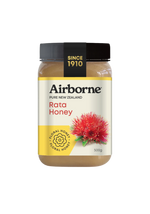
Rata
Southern
Rata is one of several species of Rata found in New Zealand but is the
one that most regularly produces a honey crop, although even this honey
is sometimes in very short supply. Anyone who has seen the Rata flowering
in January in the Otira Gorge west of Christchurch cannot forget the
sight of this brilliant red carpet covering the mountains. This area
produces the purest Rata honey, very white in colour with a subtle,
distinctive flavour, mild and rich - but not sweet, almost salty, considered
by many to be the best of New Zealand Honeys. For more detailed
information:
|
 |
|
|
|
|
|
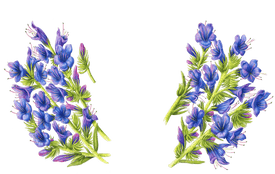
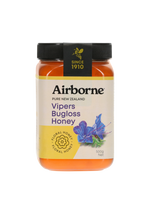
Vipers Bugloss
Also
commonly known as "Borage", this wild flower covers the hills of the
Central South Island in a sea of brilliant blue colour during summer
months. The seed, resembling a Viper's head, was once mistakenly used
as a treatment for snakebite giving the plant its unusual name. Vipers
Bugloss honey has a delicate flavour with a "chewy" texture. Hint: keep
this in the refrigerator and you have a natural chewy snack for kids
of all ages. For more detailed information:
|
 |
|
|
|
|
|
Nodding
Thistle
Found
extensively throughout New Zealand's Canterbury and Otago Provinces
in the South Island, and Hawkes Bay in the North Island, Nodding Thistle
flowers in late summer with a brilliant large mauve head characteristic
of thistles to produce a magnificent light coloured honey with a perfumed
floral bouquet and subtle flavour - perfect for those who like a mild
honey. A winner of the US Fancy Food Show "Best new Spread".
Unfortunately changing farming practices in New Zealand have decreased
the Nodding Thistle resource such that supply of this wonderful honey
is extremely limited and has failed in many of the past few years.
For more detailed information:
|
 |
|
|
|
|
|
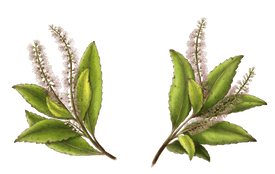
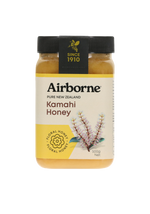
Kamahi
Kamahi
is a common tree found in many of New Zealand's rugged native forests,
and is an excellent source of honey. The creamy coloured flowers are
very attractive to bees and bloom in abundance throughout the Spring
producing a light amber honey with a distinctive, full-bodied complexity
of flavour preferred by many honey connoisseurs. For more detailed
information:
|
 |
|
|
|
|
|
Honeydew
Honeydew
nectar is produced from a small scale insect (Ultracoelostoma assimilie)
living in the bark of two of New Zealand's beech forests, mostly black
beech (black from the sooty mould growing on the surplus nectar covering
the trunks and branches) and to a lesser extent, red beech. In the early
morning sunlight, the droplets of nectar glisten like the the morning
dew, giving the name honeydew. Honeybees gather this nectar to produce
honeydew, a process they carry out in many other countries in the World,
most notably in Germany's "Black Forest".
A full flavour and aroma, heady, almost pungent, malty. A thick red
amber honey and one of our strongest flavoured. Great in marinades
to give a richness to barbecues or roasts. Full of mineral goodness,
a typical trait of honeydews. For more detailed
information:
|
 |
|
|
|
|
|
Tawari
The
'Beaujolais' of honeys, Tawari is best savoured when young. It's origins
are the lowland forests of New Zealand's far north where the elegant
tree's waxy white flowers prized by ancient Maori gift the bees a light
yellow nectar with a lingering butterscotch flavour. So subtle and mild,
it's perfect for topping pancakes, waffles or icecream. For more detailed
information:
|
 |
|
|
|
|
|
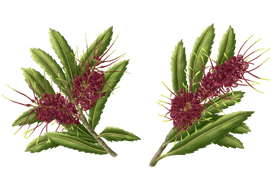
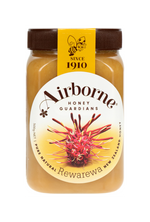
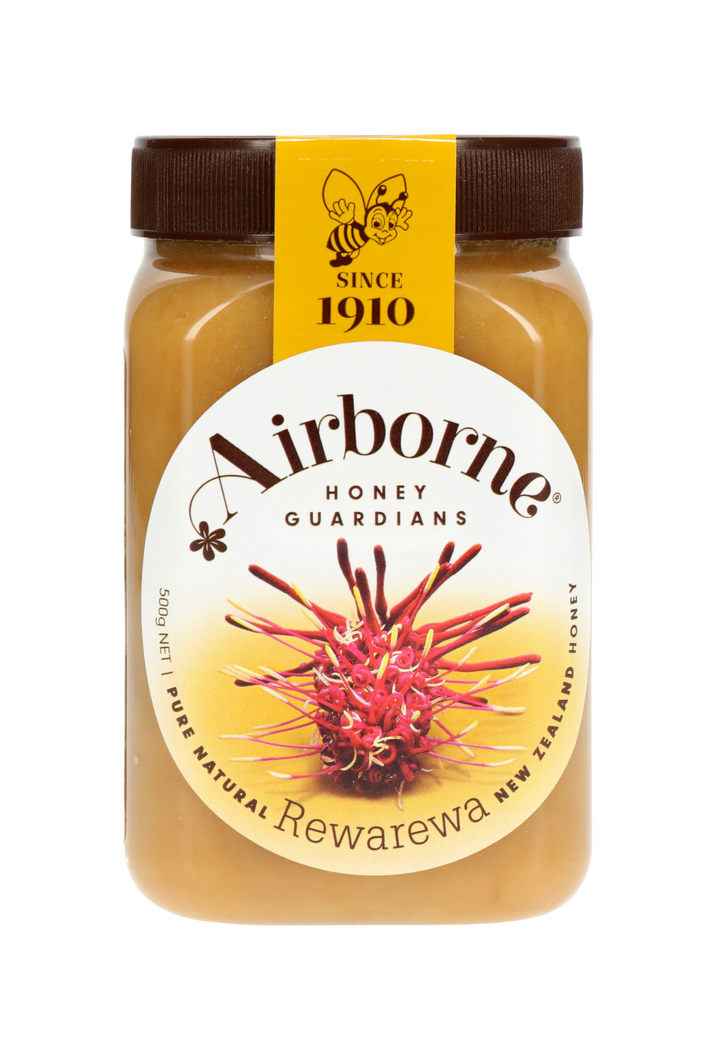
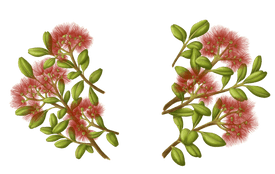
Rewarewa
Rich
and malty, this honey is full bodied yet not overly strong and has a
beautiful burnished amber hue. And because the distinctive clustered
red flowers of this New Zealand Honey suckle may not bloom well each
year, Rewarewa is a premium variety. A hint of rustic woolsheds pervades
the complex aroma. Rewarewa is a great natural sweetener for hot drinks.
For more detailed information:
|
 |